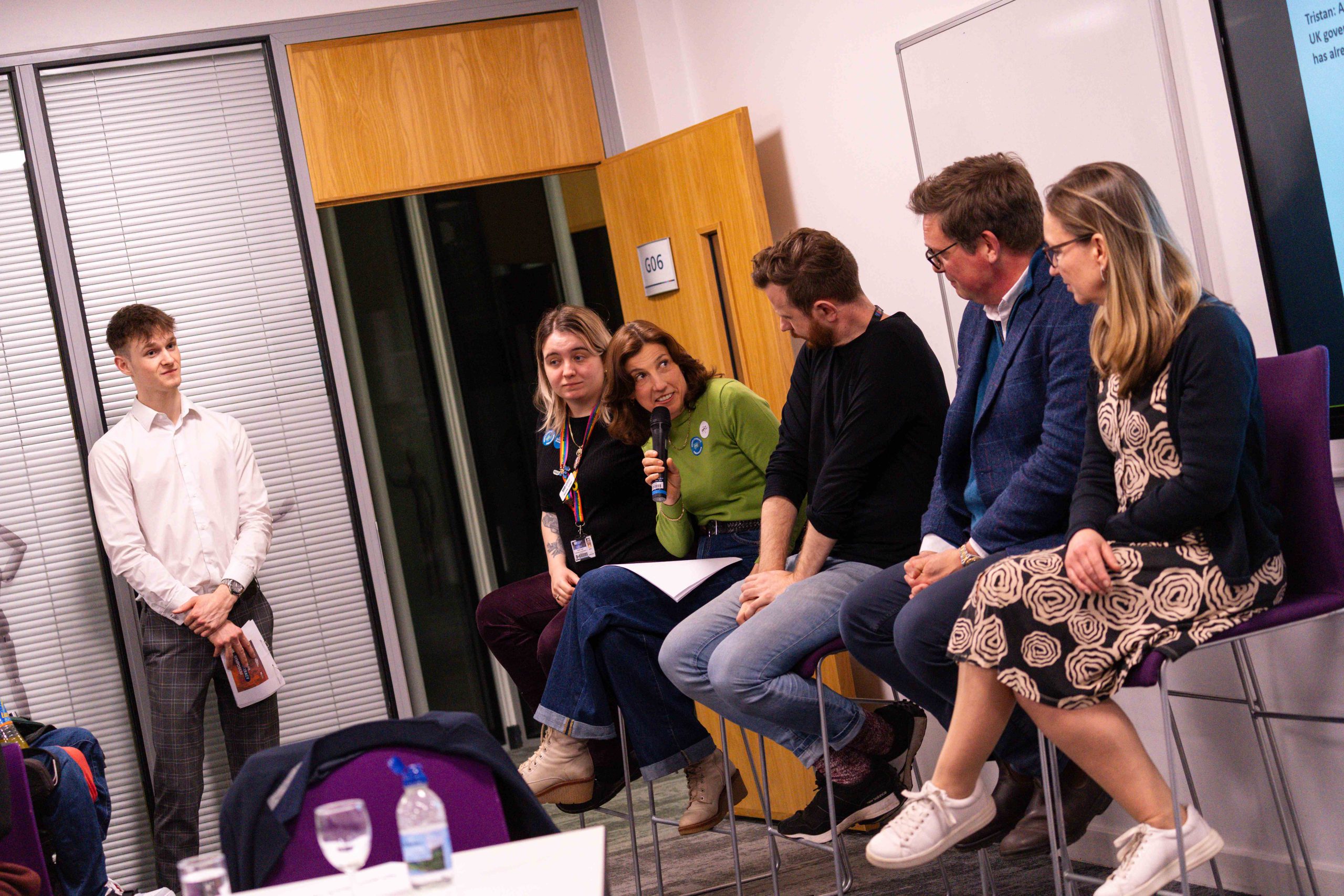
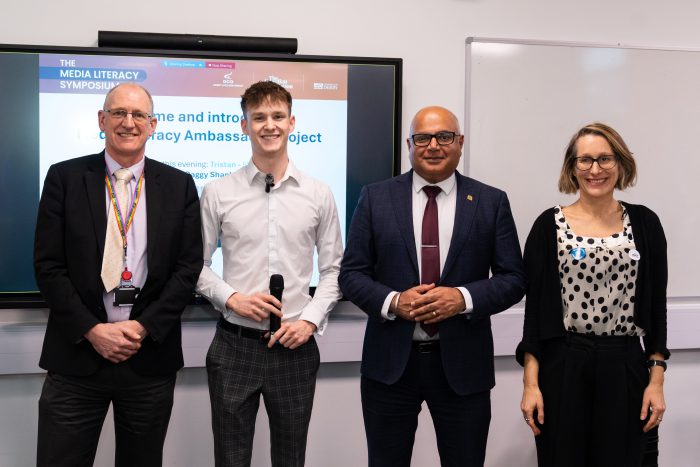
At a recent media literacy symposium held at the University of Derby’s Britannia Mill campus, delivered in partnership with The Guardian Foundation, educators, journalists, academics and students came together to reflect on progress and look ahead to the next phase of development.
What began as an innovative partnership has now developed into a thriving student-led movement. DCG now has 196 trained Media Literacy Ambassadors across six generations of students, each equipped with the skills to challenge misinformation, promote responsible digital engagement and lead informed conversations within their communities.
And the Fake or Real Workshops have now been delivered to an incredible 984 students.
From pilot initiative to national example
Derby College Group was the first further education college in the country to join The Guardian Foundation’s Media Literacy Ambassador programme.
Since then, it has embedded news and media literacy within post 16 education in a way that is increasingly being recognised as a model of good practice.
Media literacy is not simply about spotting fake news. It is about enabling young people to access, analyse, evaluate, create and act using all forms of communication.
In an age shaped by social media algorithms, influencer culture, artificial intelligence and rapidly shifting news cycles, those skills are fundamental.
National research and commentary, including reporting in The Guardian, has repeatedly highlighted growing concerns around misinformation, online radicalisation, declining trust in news and the impact of digital content on young people’s mental health.
The Guardian Foundation has responded to these challenges by investing in news literacy, voice and agency and media viability programmes, working with schools and colleges across the UK and internationally.
Derby College Group has become one of its most active and successful partners
A student led movement
A defining feature of the DCG programme is that it is led by students themselves.
At the symposium, ambassadors from the fourth and fifth generations delivered practical workshops on identifying red flags in online content, recognising disinformation tactics and challenging harmful narratives.
Participants took part in interactive sessions, applying critical thinking skills in real time.
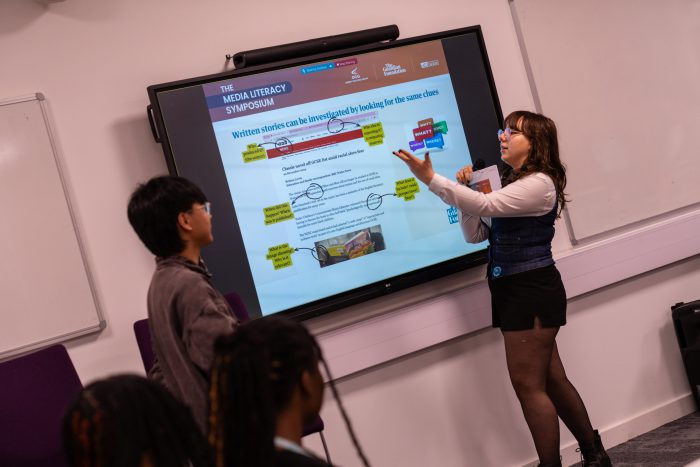
This peer to peer approach has proved transformational. Students report increased confidence, stronger analytical skills and a clearer understanding of how digital systems shape public debate.
For many, the programme has also influenced career aspirations. Some ambassadors are progressing into journalism, law, politics and communications, motivated by a desire to strengthen democratic processes and accountability.
As one student put it, media literacy is not about telling young people what to think. It is about giving them the tools to think independently.
Addressing contemporary digital challenges
The symposium also reflected the programme’s evolution in response to emerging issues.
Sessions explored the manosphere and incel cultures, and how certain online communities promote harmful ideologies and misogyny. Experts examined how extremist narratives spread and how education can build resilience against them.
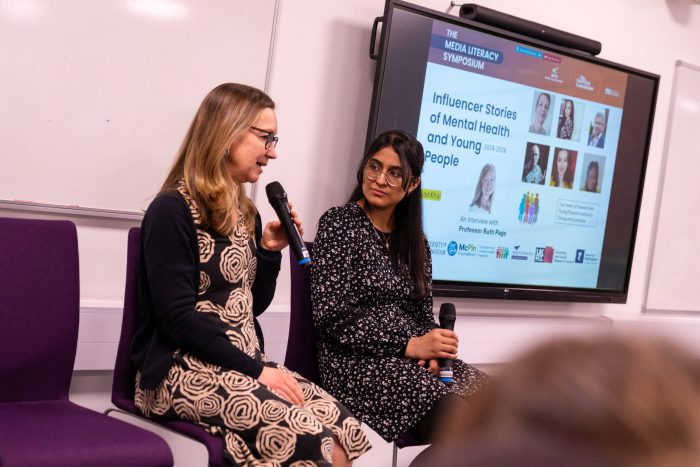
There was also discussion of the ESRC-funded Influencer Stories of Mental Health and Young People project, which examines how digital storytelling on platforms such as TikTok shapes young people’s perceptions of wellbeing and identity.
This reflects a growing recognition, reported widely in national media, that influencer culture has a significant impact on self-image, behaviour and belief systems.
By integrating these themes into ambassador training, DCG is ensuring that the programme remains current, responsive and rooted in real-world challenges.
Building democratic confidence
Media literacy is increasingly recognised as central to democratic health.
The Guardian Foundation describes it as essential to helping young people understand how journalism works, how power operates and how to hold institutions to account.
In a climate of social polarisation and fragmented information ecosystems, the ability to interrogate sources, identify bias and evaluate evidence is more important than ever.
At Derby College Group, ambassadors are not passive recipients of information. They are facilitators, researchers, panel moderators and community advocates.
They question experts, engage in debate about artificial intelligence and regulation, and explore what trust in news should look like in the digital age.
This emphasis on voice and agency is a key reason the programme continues to grow.
Expanding into Derbyshire schools
Momentum is now building beyond DCG’s own campuses.
Plans are underway to extend the programme’s reach into Derbyshire secondary schools through a pilot embedding news literacy within Key Stage 3 and Key Stage 4 civic education.
This work, led in collaboration with the University of Derby and The Guardian Foundation, represents the next stage in scaling the impact regionally.
By supporting younger students earlier in their education journey, the partnership aims to build a pipeline of critically engaged, digitally resilient learners.
Measurable growth, lasting impact
Reaching 196 ambassadors is more than a numerical milestone. It represents hundreds of hours of training, workshops delivered, conversations started, and communities influenced.
Students consistently report improved critical thinking, greater awareness of misinformation tactics and stronger confidence in public speaking and leadership. Staff have observed increased classroom engagement and deeper discussion across subjects, from politics to psychology.
Importantly, the programme has also fostered collaboration between further education, higher education and independent media organisations. That cross-sector partnership model is increasingly viewed as essential in addressing complex digital challenges.
Looking ahead
As digital platforms evolve and artificial intelligence tools become more embedded in everyday life, the need for robust media literacy education will only intensify.
Derby College Group’s continued partnership with The Guardian Foundation, alongside collaboration with the University of Derby and leading academics, places it at the forefront of this national conversation.
What started as a programme is now a movement. One led by young people who are not only navigating the media landscape but actively shaping it.
Dr Beth Woods and Debbie Painter are spearheading the expansion into schools
For more info email medialiteracy@derby-college.ac.uk