
Foundation Degree in Engineering (2 years)
The Foundation Degree in Engineering provides a solid foundation in general engineering science and mathematics, with topics related to mechanical, electrical and manufacturing engineering. The qualification is awarded by Sheffield Hallam University.
Course Summary
Course Information for Students
Who is this course for?
The Foundation Degree in Integrated Engineering is run in conjunction with Sheffield Hallam University, and the two-year programme has been designed in consultation with local employers who have expressed a need for engineering technicians to have specialist knowledge and an appreciation of the challenges across the various engineering disciplines. The programme runs in line with IET accreditation, is regulated by the Office of Students (OfS), with the qualification awarded by Sheffield Hallam University.
The FdEng programme provides the opportunity for progression from Level 3 courses such as the BTEC Extended Diploma to a Level 5 programme and, following a further year’s study, to an honours degree in Engineering (Level 6).
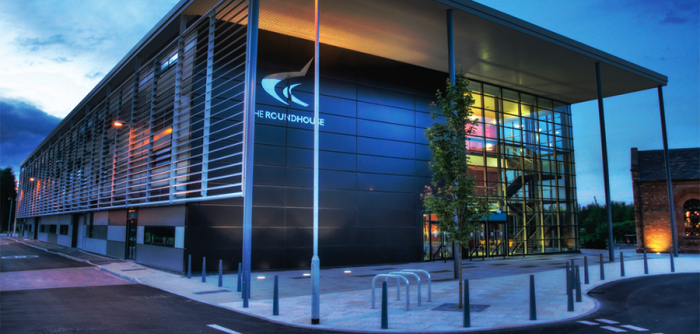
The programme is generally offered as a day-release (1 day per week) programme for those already in the workplace, either as a standalone qualification or part of an integrated degree apprenticeship. Delivery occurs at our Roundhouse Campus and students are generally on site for nine hours of class time for 33 weeks per year.
Over the two years, the programme is based upon modules covering major topics relating to mechanical, electrical or manufacturing engineering. Modules are worth either 20 or 40 credits, with 240 credits are required to achieve the Foundation Degree qualification. In addition to the time spent in college, it is expected that at least the same amount of time is spent working outside the college on assessments, research, revision and other learning activities.
Further information about the Foundation Degree course can be obtained from the HE Course Co-ordinator.
Entry Requirements
All applicants will be invited to an interview to discuss their qualifications, experience and suitable pathway options. It is also advisable to be employed and have permission from your employer to undertake this programme of study.
All applications are subject to approval by Sheffield Hallam University and applicants must be aged 18 or over at the beginning of the course.
You should have at least one of the following:
- At least one GCE A-level pass in a relevant scientific / technology subject; two AS Level passes are considered equivalent to one A-level pass
- A Level 3 Certificate or Diploma in a science or technology-based subject, preferably including Further Maths
- A pass in the Access to HE Diploma in Engineering course, or other suitable science / technology-based Foundation or Access programme containing an appropriate level of mathematics, with an overall average mark of at least 40%
- A qualification which is deemed to be equivalent to any of the above
You will also need GCSE English and Maths grade 9-4 (A*- C).
Students with a BTEC Higher National Certificate (or an equivalent qualification) in an appropriate engineering discipline may be eligible to join the second year of the programme.
Applications are also welcomed from those who lack traditional academic qualifications. All such applicants will be interviewed and may be set an appropriate piece of work upon which a judgement will be made, taking into account their academic potential and relevant industrial experience.
What will you learn?
The Foundation Degree in Integrated Engineering has three different pathways: mechanical, electrical and manufacturing. Modules taken during first year of the programme are generic to all pathways, with a module dedicated to each pathway provided in the second year.
Year 1 – All Pathways
Maths & Engineering Science (20 Credits)
Programming and Computer Based Engineering (40 Credits)
Professional Engineering Practice (20 Credits)
Engineering Design & Manufacture (20 Credits)
Year 2 – All Pathways
Automation and Control (20 Credits)
Further Engineering Maths and Engineering Science (40 Credits)
Design Challenge for Sustainability and Enterprise (40 Credits)
Electrical Pathway
Electrical Engineering Systems (20 Credits)
Manufacturing Pathway
Manufacturing Operations (20 Credits)
Mechanical Pathway
Principles of Mechanical Engineering (20 Credits)
Assessment is based upon a model where 20 Credit modules have a single assessment and 40 Credit modules have two assessments. Assessments are a mixture of coursework exams, presentations and in-class assessments, which vary between the module and pathway.
How will you learn?
The majority of programme will be delivered at the college’s Roundhouse campus which is supported by remote tutorials where required.
What will you need to bring with you?
There is no requirement to bring any equipment with you other that usually required to take notes and collate other information relevant to your programme. However, a Windows-based PC could provide useful to run the software that is used during the course and provide access to the college’s student systems whether at home or in the workplace.
How will you be assessed?
Module assessment is generally through a blend of coursework and examinations, with a weighting applied that is optimised for the materials studied and skills acquired. A common theme of high-quality presentation, referenced research and in-depth analysis runs through all forms of assessment, be it an examination, presentation, piece of coursework or laboratory report.
The intensity of the programme means that any prospective student must be able to make the commitment to study extensively outside of normal College hours to ensure all assessment deadlines are met.
Where next?
The programme aims to develop the academic and problem-solving skills of engineers so that they can be applied successfully in a vocational context.
Most students attending the course are employed in a junior engineering role and the course aims to further their career in such areas as the development and maintenance of manufacturing process plant, design and build of mechanical or electrical components, modelling of complex engineering systems or developing systems for process improvement.
Upon successful completion of the Foundation Degree, there is progression to the top-up BEng programme at the College to gain the full honours degree.
All offers made by Sheffield Hallam University will be subject to:
- successful completion of the Foundation Degree programme, including satisfying performance attainment requirements where specified
- submission of a satisfactory personal statement and reference
- meeting the University’s literacy and numeracy requirements
- satisfying any additional specific course requirements for entry to the designated progression route which may include successful attendance at an interview or selection event, successful completion of associated bridging studies or any non-academic conditions
Offers are made subject to the availability of courses and the University Terms and Conditions.
Who do you contact for more information?
For more information, contact Derby College Group on 0800 0280289 or enquiries@derby-college.ac.uk
Disclaimer
Course Information for Employers
Information for Employers
Career Information
DCG Success Stories
Discover how our students have achieved success. Their hard work and dedication to learning has enabled them to succeed in rewarding careers or progress onto higher education.

We encourage progress and aspirational outcomes by guiding people onto learning pathways that lead to positive destinations. Our students have gone on to achieve great things since leaving the College. We would like to share some of their inspiring success stories with you.

Course Information Last Updated On: January 30, 2026 5:05 pm
