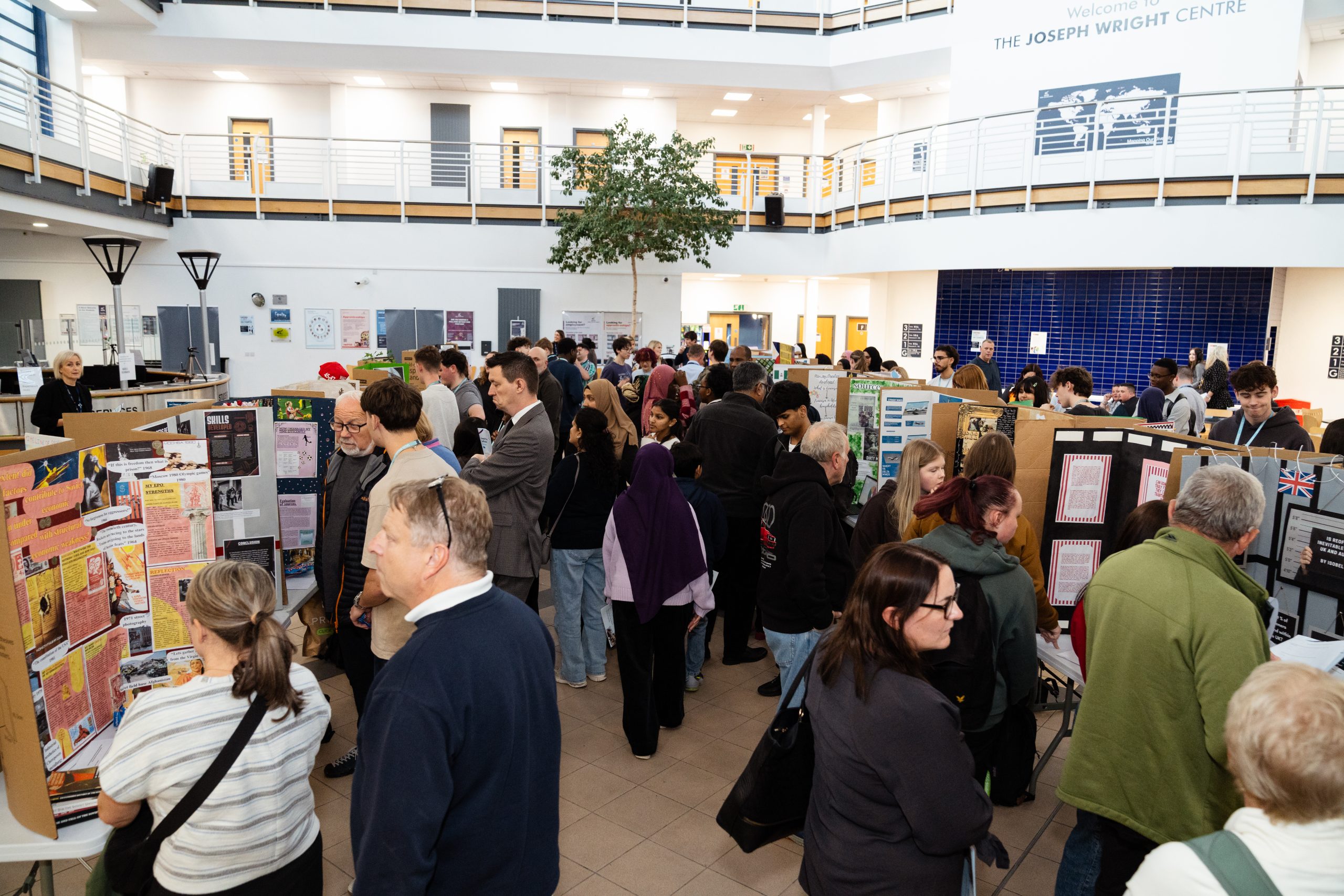
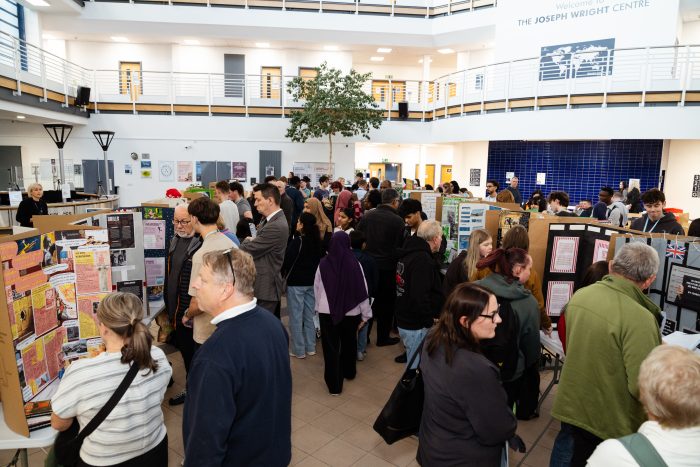
The annual event gave students the opportunity to present their independent research projects to relatives, friends, staff and members of the local community.
This year’s showcase was supported by Elizabeth Fothergill CBE, HM Lord Lieutenant of Derbyshire, who spoke to the students about their work.
What is the EPQ, and how does it help with university?
The EPQ gives students the chance to choose a question they are passionate about, research it independently and present their findings in a written report or artefact, followed by a presentation.
It is worth half an A-level in UCAS points, up to 28 points for an A* grade, and is highly regarded by universities. Some universities make lower offers to applicants who have completed an EPQ.
The EPQ also gives students a head start for degree level study. They learn how to manage a long project, evaluate sources, reference properly and build a reasoned argument. Their project also gives them a strong talking point for personal statements and interviews.
From dinosaurs to Formula 1
The projects covered a remarkable range of subjects. Owen O’Donnell explored what helped the Ankylosaurus survive, Melissa Bedford asked how the Tudors shaped the way Britain works today, and Gracie Reed looked at the opportunities Formula 1 offers women.
Other topics included the impact of 9/11 on the wellbeing of firefighters, how COVID affected primary school education, miscarriages of justice in the UK and the welfare of dogs in competitive sports. Alishah Raja even produced a painting in the Impressionist style of Claude Monet.
Is AI going too far?
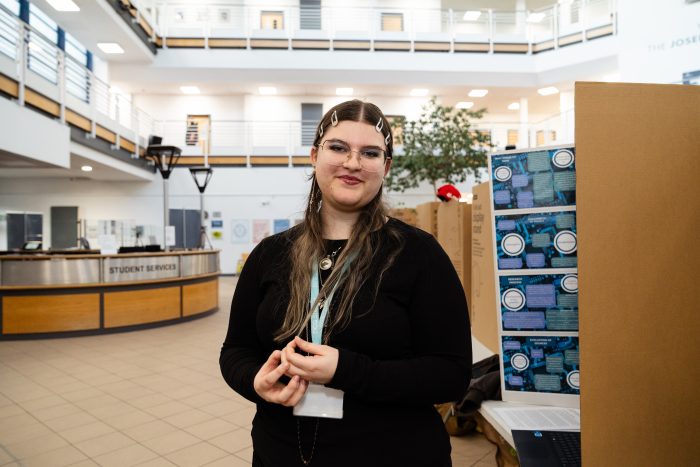
Esme Heath (18), who studies Psychology, Biology and Sociology, asked: “Has society pushed the ethical boundaries of AI too far?” Her project focused on the psychological effects of AI, with support from one of her teachers, who is a psychologist.
Esme said: “I really enjoyed looking at the psychological side of AI and how it affects people. Having a teacher who is a psychologist helped me so much. It’s made me think carefully about where AI is heading, and I do have some concerns about that.”
Esme hopes to go on to work in biomedical science after university.
Why are ACL injuries more common in women’s sport?
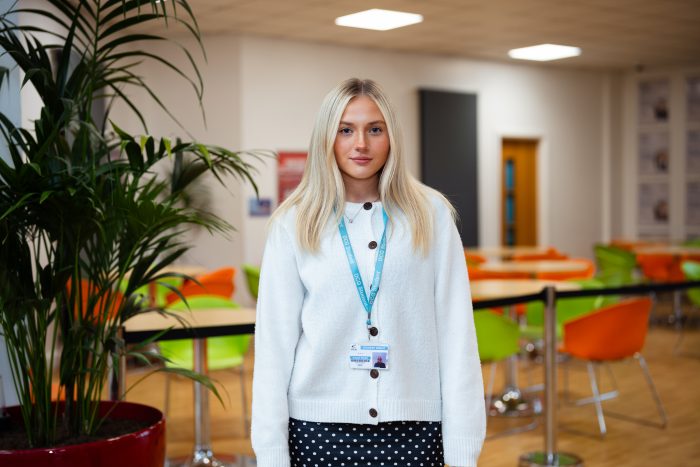
Freya Pennington, who studies Business, Politics and Media, explored the question: “To what extent are ACL injuries in female sports more frequent than in male sports, and what factors contribute to or challenge this statement?”
The anterior cruciate ligament (ACL) is one of the key ligaments that stabilises the knee, and high profile injuries in women’s football have brought the issue into the spotlight. Freya looked at the biological factors that may play a part.
Freya said: “The more I read, the more I realised how much we still don’t know. There needs to be a lot more research into why female athletes are affected, so we can find better ways to protect them.”
Are wormholes real?
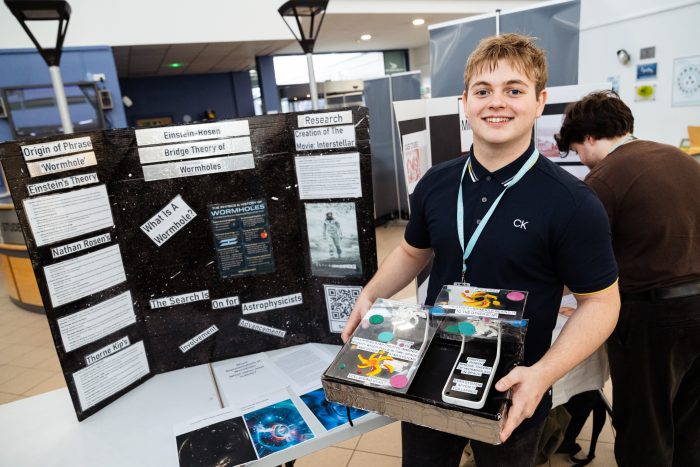
Lewis Brocklehurst, who studies History, English Literature and Law, took his research into space, asking: “Are wormholes real or completely theoretical?”
Wormholes are theoretical tunnels through space and time that could, in principle, link two distant points in the universe. They first appeared in the work of Albert Einstein and Nathan Rosen in 1935, but no one has ever found one, and scientists believe one would need exotic forms of matter to stay open.
Lewis said: “I chose wormholes because I love the complexity of the argument. There are brilliant ideas on both sides, and weighing up the evidence was a real challenge, but that’s what made it so enjoyable.”
Lewis would like to become a commercial or corporate lawyer.
Chasing the American dream
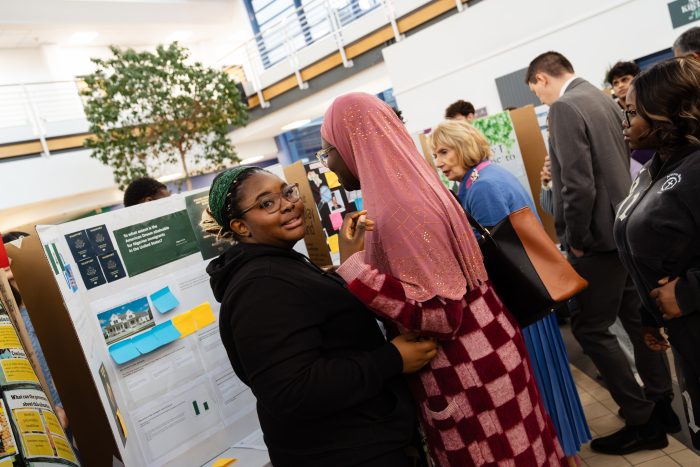
Tamara Awipi, who studies Law, History and Sociology, asked: “To what extent is the American dream attainable for Nigerian immigrants in the United States in the 21st century?”
Tamara moved to the UK when she was 13, which gave her a personal connection to the topic.
Tamara said: “Packing up your whole life and moving to a new country is a huge thing to do. I think when you start again somewhere new, you often feel you have to work that bit harder to prove yourself. I wanted to understand those experiences and what success really looks like for people who make that journey.”
Tamara hopes to become an immigration lawyer.
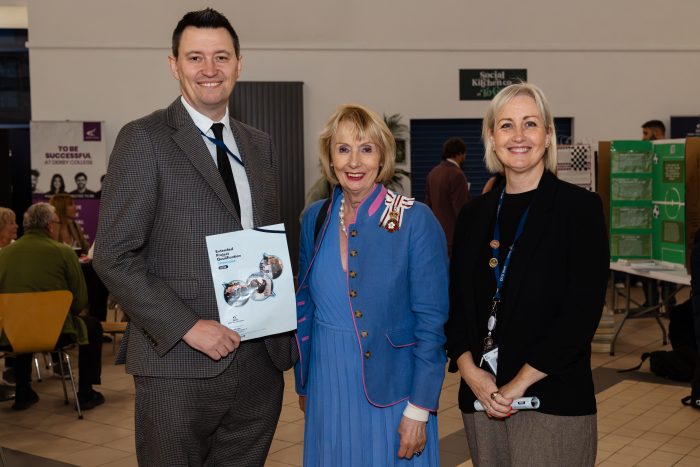
Elizabeth Fothergill CBE, HM Lord Lieutenant of Derbyshire, said: “It was a real privilege to join the students at this year’s EPQ Showcase.
“The curiosity, confidence and maturity they showed in talking about their research was inspiring, and the range of subjects they tackled was remarkable.
“These young people are a credit to themselves, their families and Derbyshire, and I have no doubt they will go on to make a real difference in whatever path they choose.”
Sally Archer, Head of A-levels at DCG, said: “Our EPQ Showcase is always one of the highlights of the year, and 2026 was no exception.
“The range of topics shows just how curious and ambitious our students are. The EPQ is brilliant preparation for university, and our students spoke about their research with real confidence and passion.
“A huge thank you to the Lord Lieutenant for supporting the event, and to everyone who organised, contributed and came along.”