
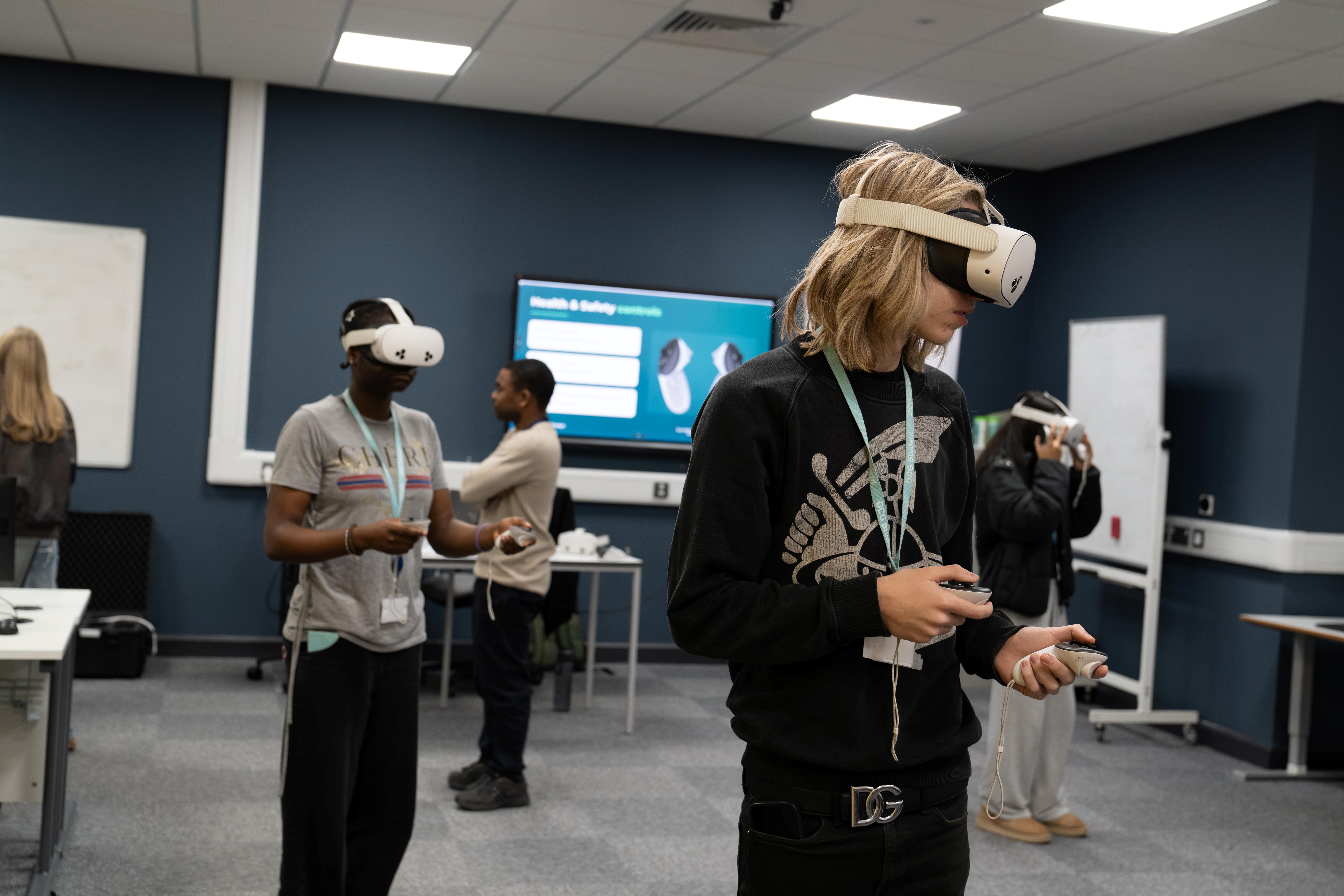
Students develop VR experiences that will give school pupils across the East Midlands the chance to step inside real-life simulations.
Students from Derby College Group (DCG) have helped to design a new virtual reality (VR) careers experience that will give school pupils across the East Midlands the chance to try out a real job in the nuclear industry, without leaving the classroom.
The College was one of just three in the region chosen to take part in the Immersive Work Experience project, commissioned by the East Midlands Careers Hub (within the East Midlands Combined County Authority (EMCCA) and in partnership with The Careers & Enterprise Company (CEC)), and delivered by VR specialists Immersive Pathways.
DCG’s students took on the clean energy and defence strand, working to a live brief shaped by major employers in the sector, who will now review their designs.
Clean energy and defence are among the most strategically important sectors in the UK, and both are major employers in the East Midlands. Nuclear technology is used to generate low carbon electricity and to power submarines, and Derby is home to one of the country’s most significant centres for nuclear engineering.
Major nuclear projects planned across the region, including a prototype fusion power plant at West Burton in Nottinghamshire, are expected to create thousands of skilled jobs in the years ahead. Yet many young people still have little idea of the careers on offer on their doorstep.
A day in the designer’s chair
On Friday 13 November, students studying the Level 3 Digital T Level in Software Development and Level 3 Media spent the day at the College working alongside the technical team from Immersive Pathways, with the East Midlands Careers Hub as their client.
The day began with students putting on headsets and testing existing VR job simulations, including a construction health and safety experience in which they had to spot hazards on a virtual site.
Working in pairs, they recorded what helped them understand the task, what felt confusing and what they would change for a new user.
Then the real work began. In teams of four, the students researched careers in the nuclear industry and chose one job and one task to bring to life, focusing on either health and safety or manufacturing and inspection.
Their brief was to design a five-to-ten-minute activity, set in a fictional workplace, that would let a school student aged 13 to 18 try that task for themselves.
Each team planned learning outcomes, built a six-frame storyboard showing what the user would see, do and decide at every step, and finished the day with a four-minute pitch to the Immersive Pathways team, followed by questions.
The designs will now be reviewed by employers from the sector. One will be selected and developed into finished VR software, potentially drawing on the best ideas from other teams.
The completed simulation will be made available to schools and colleges across the region through the Careers Hub, and Derby College will be credited as part of the team that designed it.
One student summed up the day in their feedback as “very engaging and a good opportunity to work with new individuals.”
What the students said
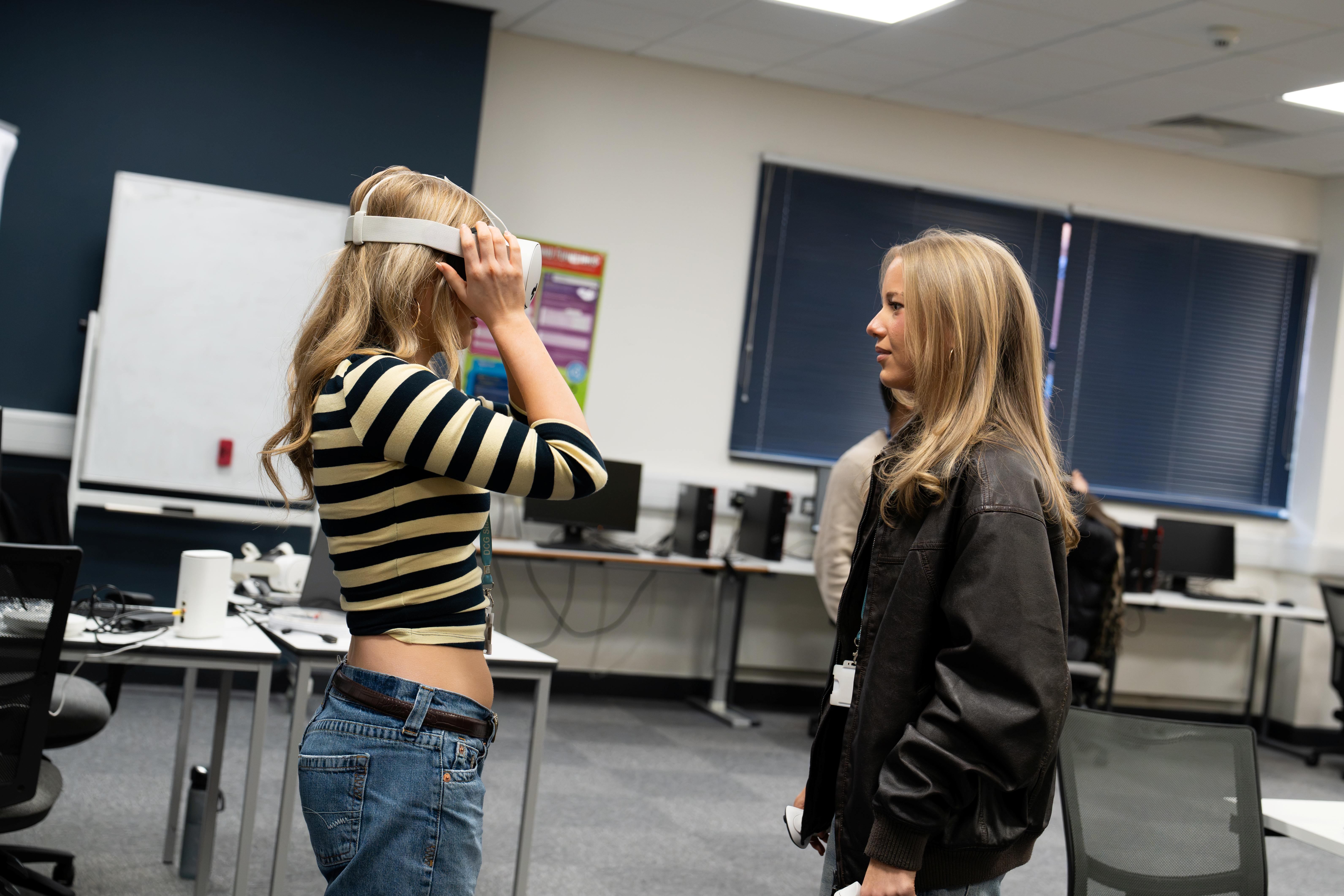
Digital multimedia students Harriet and Ruby found storyboarding for the software relevant to their course.
Harriet Slater, 19, a second year Digital Media student, said: “I really enjoyed the day. What interested me most was seeing how VR can genuinely help people.
“You can put someone inside a workplace they might never get the chance to visit and let them try a real task safely.
“They can make mistakes, learn from them and try again, which you just cannot do in the real world in an industry like nuclear.
“For a young person who has never even thought about these careers, that could be the moment something clicks.
“I want to go into the film industry, so I loved the storyboarding.
“Thinking about what the user sees and hears at every single step is a lot like planning a film, except the audience is standing inside the story.”
Ruby Parkin, 17, who is also studying Digital Media, said: “It was brilliant to work on a real brief for a real client. It felt like a proper job rather than a classroom exercise.
“I would like to do a degree apprenticeship next, potentially in brand marketing or graphic design, and pitching our idea taught me a lot about how to sell a concept to an audience, which is exactly what branding is all about.”
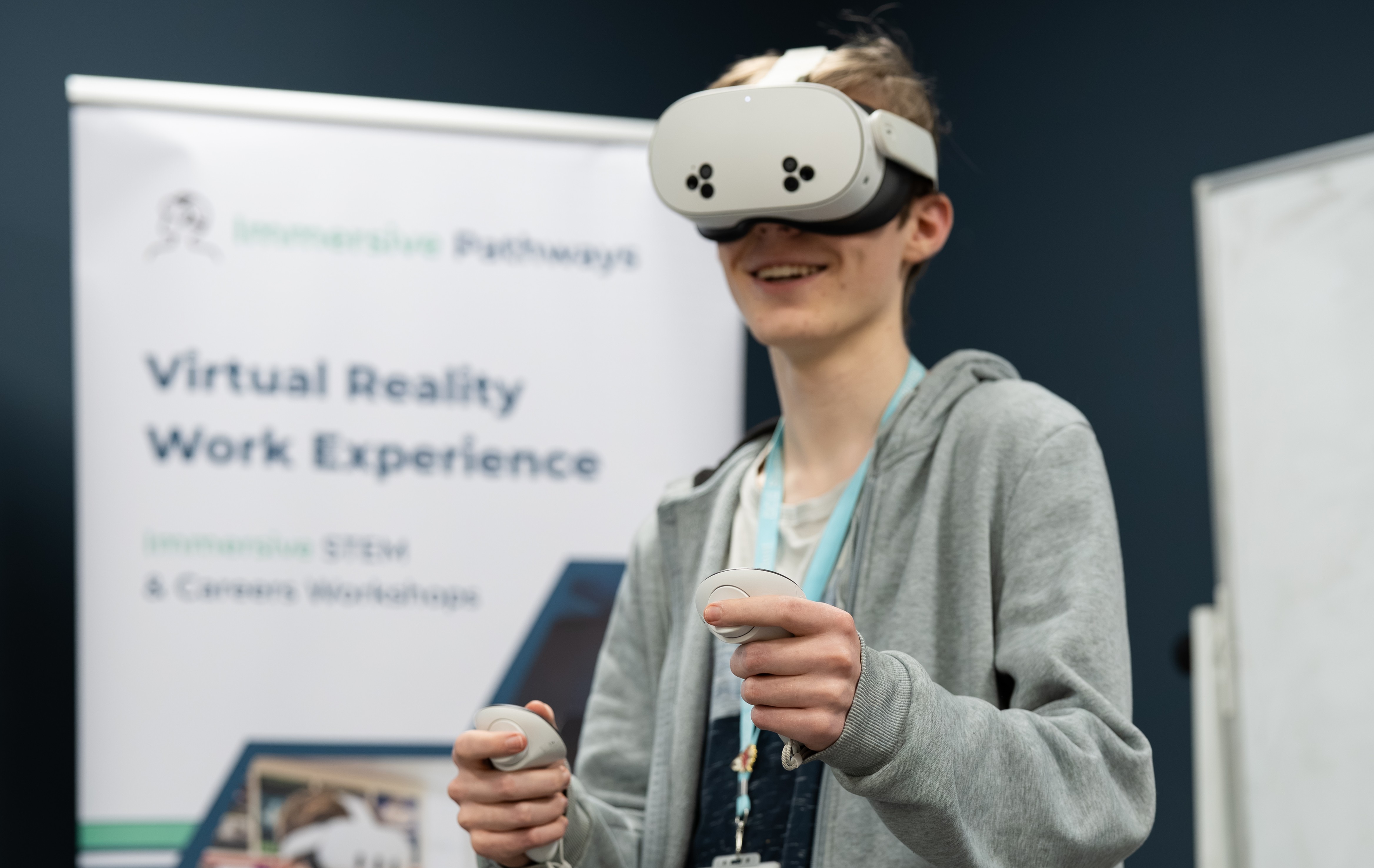
Computer Science student Alexander recognised how important VR is becoming across every industry.
Alexander Dykes, 16, who is studying the Digital T Level in Software Development, said: “I was really surprised by how much VR is already used in jobs.
“I thought it was mainly for gaming, but businesses use it to train people for things that would be dangerous, expensive or impossible to practise in real life, like spotting hazards or checking parts for faults.
“You can repeat a task as many times as you need to and nobody gets hurt. It made me realise VR could be used in almost any industry, from training engineers to helping people understand a job before they apply for it.
“There are going to be careers in building these simulations as well as using them, and that is something I would definitely be interested in.”
A project by young people, for young people
Cassie Ensor, Programmes Coordinator for the Careers Hub at the East Midlands Combined County Authority, said: “The Careers Hub works to help every young person in our region make informed choices about their future, and the best way to do that is to give them real experiences of working life.
“This project goes one step further. Rather than simply experiencing a careers activity, the students at Derby College have helped to create one.
“They brought fresh ideas, creativity and real thought about what would engage someone their own age.
“The simulation that comes out of this work will reach students in schools right across the East Midlands, opening their eyes to exciting careers in clean energy and defence that many of them may never have considered.”
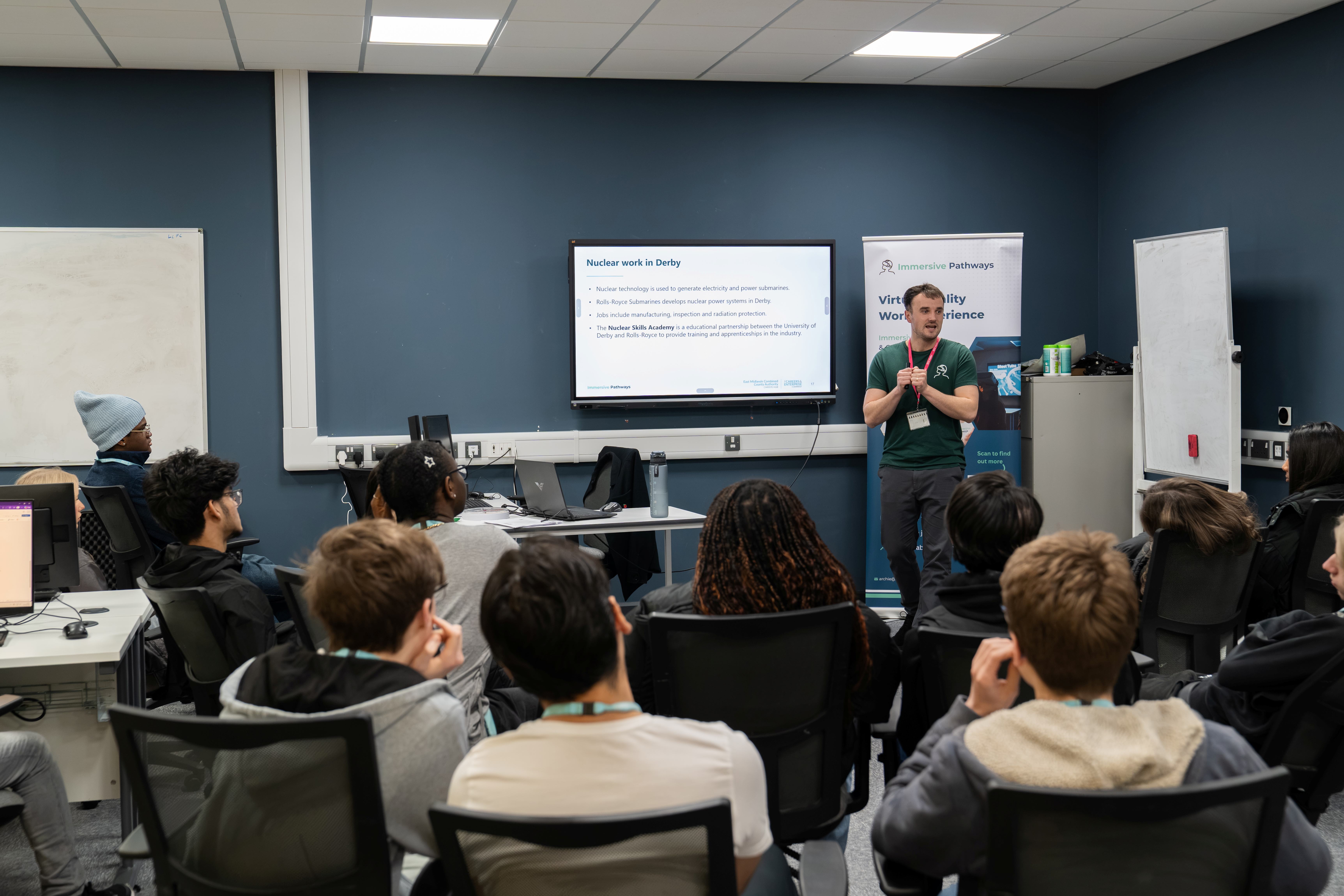
Archie Patton, director of Immersive Pathways, delivered the workshops to students at The Joseph Wright Centre.
Archie Paton, Director of Immersive Pathways, who led the day, said: “We build VR simulations that help people practise workplace tasks, and today the students worked exactly as a professional design team would.
“They tested the technology, researched the roles, thought carefully about the user and pitched their ideas with real confidence.
“What they produced is not a classroom exercise. Their designs form the brief we will build from, so their thinking will directly shape a piece of software that young people across the region will use.
“It was a pleasure to work with such a creative and committed group.”
Francis Malute, Academy Manager for ICT and Games Development at Derby College Group, said: “Opportunities like this are exactly what our students need.
“They worked on a live commercial brief, alongside the people who build this technology for a living, and saw how the skills they are developing at college are used in the real world.
“Immersive technology is a growing part of the digital and games industries, and our students now have a named project and a real client they can talk about on their CVs, in personal statements and at interview.
“Most importantly, the work they have done will help other young people discover careers they might otherwise have missed. We are very proud of every one of them.”
The project reflects Derby College Group’s commitment to working closely with employers and regional partners to give students meaningful encounters with industry and prepare them for the jobs of the future.
From Derby College to classrooms across the East Midlands
Mayor of the East Midlands, Claire Ward, said:
“Our Careers Hub works to help every young person in our region make informed choices about their future, and the best way to do that is to give them real experiences of working life.
“This project goes one step further. Rather than simply experiencing a careers activity, the students at Derby College have helped to create one.
“They brought fresh ideas, creativity, and real thought about what would engage someone their own age.
“The simulation that comes out of this work will reach students in schools right across the East Midlands, opening their eyes to exciting careers in clean energy and defence that many of them may never have considered.”