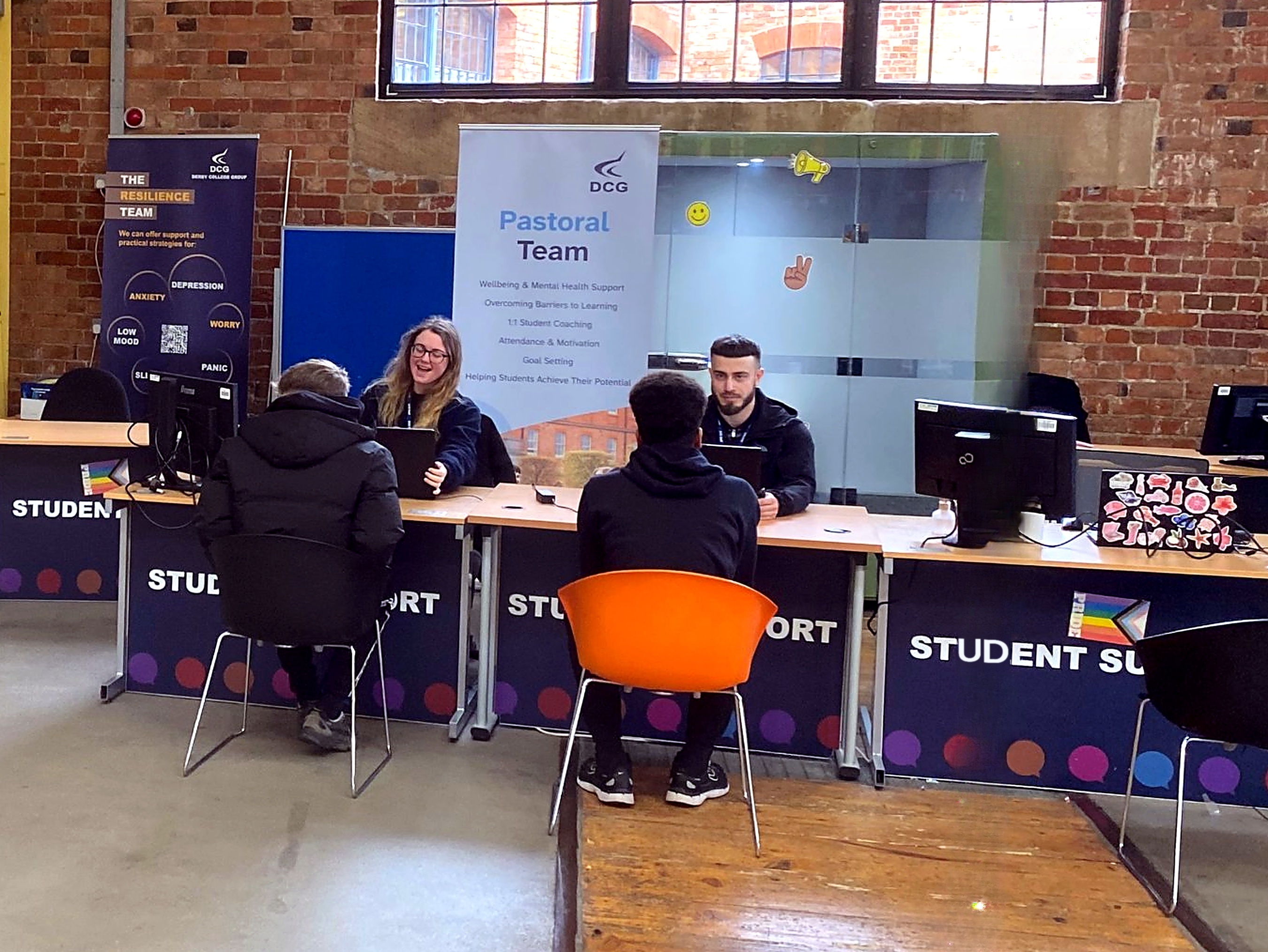

Derby College Group (DCG) has welcomed today’s final report from former Health Secretary Alan Milburn on young people and work, saying its focus on early support, colleges and partnership reflects work that is already happening.
The Milburn Review sets out plans to cut the proportion of 16 to 24 year olds who are not in education, employment or training (NEET) from around 13 per cent to 5 per cent by 2036. More than one million young people across the UK are currently NEET.
Its recommendations include a legal Opportunity Guarantee, giving every young person a route into education, training or work, and a Support Guarantee covering the health, employment and practical help needed to take that route up.
A new local Youth Opportunity Service would give each young person a named adviser and a personal plan.
The report also calls for more than 150,000 extra 18 to 24 year olds in further education each year, and a new participation and work readiness premium to fund outreach, mentoring, pastoral support and employer links for 16 and 17 year olds who are NEET or at serious risk of becoming so.
Mr Milburn says colleges should become England’s principal technical and transition institution, connecting school to skilled work.
Reaching young people early
At DCG, programmes such as Routes and the wider Foundation Learning offer are designed to engage young people who are at risk of becoming NEET, have faced barriers to learning, or need a more personalised pathway back into education and training.
Routes provides a bridge into mainstream college study. Alongside building confidence, resilience and employability skills, learners take part in weekly vocational sessions in construction trades, automotive, health and early years.
These are priority growth sectors where employers are actively looking for talent and where there are genuine opportunities for long term careers.
Every learner is supported by dedicated teachers, mentors and youth workers who work together to motivate, encourage and challenge them to reach their full potential.
Aaron Denton, Vice Principal – Student Experience and Inclusion at DCG, said:
“When a young person disengages from learning, it affects far more than their job prospects. It knocks their confidence, their wellbeing and their sense of purpose. That is why we focus on reaching them early, before they slip out of the system altogether.
“What makes Routes and our Foundation Learning programmes work is the wraparound support around every learner. Our teachers, mentors and youth workers know each young person and work together to break down the barriers in their way.
“We are seeing more young people engaging with education, improving their attendance, developing real aspirations and moving on to meaningful next steps.
“Many of these learners simply needed the right environment, the right support and someone to believe in them.
“The Milburn Review is right that pastoral support, mentoring and work preparation must be properly funded, because that is exactly what keeps young people on track.”
Potential for greater capacity
Demand for the programmes continues to grow year on year, and DCG says its biggest challenge is now physical space.
With additional teaching facilities and learning spaces, the Group could support even more young people and help reduce NEET numbers further across Derby and Derbyshire.
Heather Kelly, Deputy Chief Executive of DCG, said:
“We welcome the Milburn Review and its recognition that colleges have a central role to play in giving every young person a route into learning and work.
“Further education colleges are where many young people get a second chance, and in Derby and Derbyshire we are already seeing what is possible when that chance is backed by the right support.
“Our biggest challenge is capacity. We need not just teaching capacity, but also workshop space and social space where young people attending our campuses can enjoy breakfast and lunch.
“This is especially important for those from disadvantaged backgrounds. There are more young people in our communities who would benefit from this kind of programme.
“If the extra places the report calls for come with the facilities to deliver them, we can do even more.